

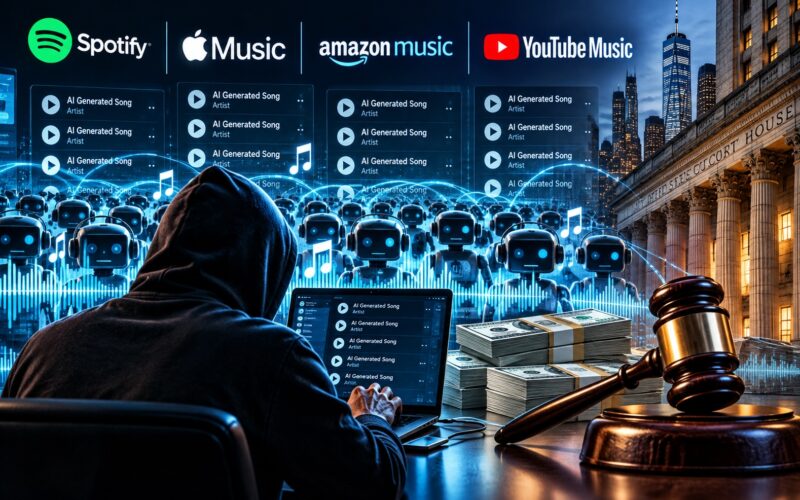
A North Carolina man who used artificial intelligence, thousands of automated accounts and a massive catalog of computer-generated music to manipulate streaming royalties has been sentenced to 18 months in federal prison. The case shows how AI and automated streaming can be combined to generate millions of dollars from music without a legitimate audience behind the activity.
According to NYC Newswire, Michael Smith, 54, of Cornelius, North Carolina, received the sentence in Manhattan federal court after pleading guilty to conspiracy to commit wire fraud. Federal prosecutors said Smith engineered a years-long operation that generated billions of illegitimate streams and diverted more than $8 million in royalty payments.
U.S. District Judge John G. Koeltl also sentenced Smith to two years of supervised release and ordered him to forfeit more than $8.09 million. The sentence follows a federal investigation into an operation prosecutors said ran for years across several major music streaming platforms.
How the Streaming Scheme Worked
According to federal prosecutors, Smith’s operation ran from 2017 through 2024 and combined two increasingly important issues facing the music business: artificial intelligence and artificial streaming. Prosecutors said the system was designed to make automated listening activity appear to be legitimate consumer streams.
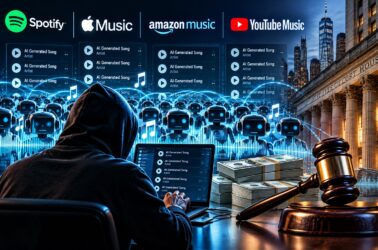
Smith created thousands of accounts on streaming services including Spotify, Apple Music, Amazon Music and YouTube Music. Instead of actual listeners controlling those accounts and choosing what to hear, software was used to repeatedly play music connected to Smith.
At certain points, prosecutors said, as many as 10,000 bot accounts were operating simultaneously. Smith also used fake email accounts and fraudulently obtained debit cards as part of the process of establishing the streaming accounts.
Simply playing a small number of songs millions of times, however, could have attracted attention from streaming platforms looking for unusual activity. Smith needed enough music to distribute the fraudulent streams across a much larger catalog, making the listening patterns more difficult to identify.
Hundreds of Thousands of AI-Generated Songs
Smith obtained hundreds of thousands of AI-generated songs that could be uploaded to streaming platforms and then played by his automated accounts. Artificial intelligence gave the operation a way to produce the volume of music needed without relying on a traditional catalog created and recorded by artists.
The large catalog allowed the streams to be distributed among thousands of tracks instead of creating an obvious spike around a handful of songs. Federal investigators uncovered an email in which Smith said he needed “a TON of songs fast” to work around streaming platforms’ anti-fraud systems.
The scale eventually became enormous, with prosecutors saying the AI-generated catalog accumulated billions of fraudulent streams. Those streams resulted in more than $8 million in royalty payments that federal authorities said Smith was not legitimately entitled to receive.
One comparison included by prosecutors illustrates just how large the operation had become. In April 2023, Smith’s automated accounts generated 80.9 million YouTube Music family-plan streams of his AI-generated material, while Taylor Swift’s entire catalog generated 9.3 million family-plan streams on the platform during the same month.
Why Fake Streams Can Affect Real Artists
Streaming fraud isn’t simply about making a song appear more popular than it really is. Fraudulent activity can also affect how money moves through an industry where artists, songwriters and other rights holders depend on streaming royalties as part of their income.
Streaming services distribute enormous amounts of money to recording and publishing rights holders based in part on listening activity. When automated accounts are disguised as genuine listeners, fraudulent streams can redirect money within the royalty system toward content that was not actually being consumed by real fans.
That makes artificial streaming particularly important for independent artists, who increasingly depend on digital platforms to build audiences and generate revenue. Streaming numbers can also help artists demonstrate momentum to promoters, venues, potential collaborators and other music-industry partners.
Spotify says streams it identifies as artificial do not earn royalties, aren’t included in public stream totals or charts and don’t positively affect its recommendation algorithms. The platform can also remove tracks that appear primarily designed to generate artificial streams, while distributors may impose additional penalties on accounts connected to manipulation.
Spotify also warns artists against promotional companies that guarantee streams or playlist placement in exchange for payment. Some services offering guaranteed results can rely on bots or other artificial methods instead of connecting artists with genuine listeners.
AI Is Creating a New Challenge for Streaming Platforms
The Smith case also highlights an important distinction as AI becomes more common throughout music. AI-generated music itself and using AI-generated material as part of a fraudulent streaming operation are separate issues.
Generative AI can be used as a creative tool for songwriting, production, experimentation and other parts of making music. The criminal conduct in Smith’s case involved combining a huge AI-generated catalog with fake accounts, automated listening and deceptive activity designed to produce royalty payments.
The ability to generate music at enormous scale nevertheless presents a new challenge for streaming companies. A person can potentially create and distribute far more tracks using AI than would have been practical through a conventional recording process involving individual musicians, producers and studio sessions.
Streaming companies are responding by developing systems intended to identify artificial streaming, spam and mass-upload strategies. As AI tools become more accessible, platforms will increasingly have to distinguish between legitimate experimentation with the technology and content being created primarily to manipulate their systems.
The financial incentive to detect fraud is significant because streaming has become a much larger part of the global music business. Spotify reported that its annual music-industry payouts increased from approximately $1 billion in 2014 to $10 billion in 2024, illustrating how much money now flows through digital listening.
What This Means for Independent Artists
Smith’s prosecution is significant because federal authorities initially described the case as the first criminal prosecution involving artificially inflated music streaming. His sentencing provides a clear example that large-scale streaming manipulation can move beyond deleted songs, withheld royalties or platform penalties and become a federal criminal matter.
For independent artists, the case also reinforces the importance of understanding how outside marketing and promotion companies are generating streams. An artist paying someone to promote a song should know whether those numbers are coming from advertising, playlists, social media exposure and genuine listeners or from automated activity.
A sudden increase in plays may look impressive on an artist dashboard, but streams produced by bots don’t represent new fans buying tickets, purchasing merchandise or returning for the next release. Artificial streams can also expose artists and distributors to penalties when platforms identify suspicious activity connected to their music.
For independent musicians building careers without major-label resources, genuine audience growth remains more valuable than inflated numbers. Ten thousand listeners who intentionally discover an artist, follow that artist and potentially attend a show represent something fundamentally different from hundreds of thousands of automated plays.
The growing availability of AI means producing and distributing music at scale has never been easier. The Smith case demonstrates that the same technology can also be combined with automation to manufacture the appearance of an audience that doesn’t actually exist.
As AI-generated music becomes more common across streaming platforms, the difference between real reach and manufactured streams will become increasingly important. For independent artists in particular, sustainable careers will still depend on something bots cannot manufacture: real people choosing to listen.





 TEAM YHL










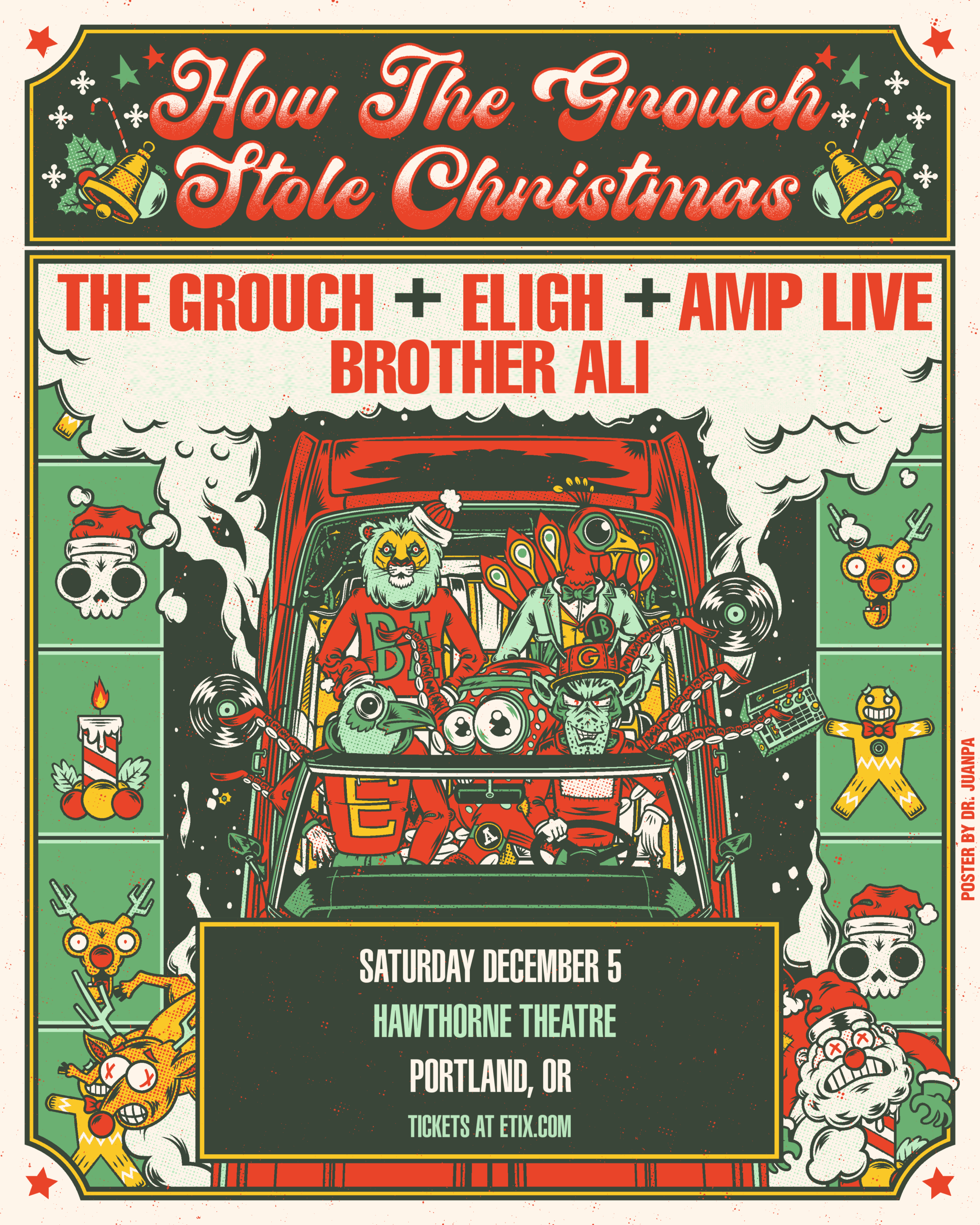
 The Grouch & Eligh bring the How The Grouch Stole Christmas Tour to Treefort Music Hall 12/3 Ft. AmpLive with Special Guests Brother Ali and Lyrics Born
















Leave a Reply